My pope

Franciscus_in_2015Today my thoughts go to Pope Francis. Maybe because yesterday we got a nice surprise from him. He wrote to us saying: Dear Sisters, I accompany you all in this General Chapter.  May God give you courage and patience to allow „life to unfold.” And please, I ask that you pray for me. Affectionately, Francis. It’s hard not to be moved by these words! I’m also thinking of him, of course, because in a moment he will go to Poland and it is a pity that I’m not there.

I remember exactly where I was in March 2013, when he was announced Pope. The first news was puzzling: A Jesuit pope? With the name Francis? It was already sounding like a lot of noise 😉

A few months ago I was asked to write what are my expectations of the current pope, and here’s what I wrote then:

When I heard the question about my expectations of Pope Francis, it seemed difficult. But when I got deeper into the topic, it turned out to be extremely difficult! I decided to approach the subject from a different perspective and first imagine what would my dream church look like. Then I tried to find the places where the pope could be involved. This is the picture I got: I dream of a shepherd who would speak in the language of his sheep, not philosophical or theological mumbling; who would openly name the errors of people of the Church and strive to treat instead of hiding them (especially the great sins of pedophilia, greed and pride); who would be open to dialogue with other cultures and religions; who would take the Gospel to the people in all the peripheries of society; who would not condemn, but preach the love of the merciful God; who would place a particular human tragedy over the moral law; who would be present among the people, and not look down on them; and above all, who would be a shepherd listening constantly to the Holy Spirit and not afraid of radical changes under the influence of that voice.

As you can see, Pope Francis makes my dreams come true with excess. I think that’s because he is a man immersed in the Holy Spirit, who allows himself to be led and does not care about the political connections or conventionalities. It is difficult to expect anything of a man like this, except one: just continue. The only thing, however, that remains my dream is for the whole Church to follow Francis – from cardinals and bishops to the slightest parishioner. I feel that we have a long way to go.

Recently, I have a little less work than I thought, so I have more time to read things on the Internet. I must admit that I am surprised at the amount of negative comments about Francis. As I read the Gospel, I cannot imagine a person who would be following Jesus more directly – he always stands side by side with the poor and sinners, admonishes those who turned the law into their god, comes with mercy to everyone without exception. But there are people, and a whole lot of them, who read the Gospel and Francis’s actions in the opposite way. I’m far from making a simple statement, that I am right and they are wrong, because this is in some way a great mystery. God works in the hearts of people in different ways and thus constantly reminds me that things are not obvious, that „His ways are not my ways” (cf. Isaiah 55.8).

I just hope that we are all looking for the true good, and not our self-interest, as the two apostles of today’s Gospel. We know, however, that even such as them, God can handle.

Zaszufladkowano do kategorii Refleksje o Bogu | 2 komentarze

Oczywiste oczywistości

fotografie-surreale--fotomotiv-eisberg--816425W dzisiejszej Ewangelii Jezus mówi do tłumów w przypowieściach. Bardzo lubił to robić i miał ku temu kilka powodów. Do mnie dziś przemówił jeden z nich. Chociaż czytanie kończy się słowami: ” Kto ma uszy, niechaj słucha!”, aby zrozumieć przypowieść trzeba właśnie przestać słuchać uszami, a zacząć słuchać sercem. Czasem chcielibyśmy dostawać jasne odpowiedzi na tacy, zamiast wychylić się poza to co na pierwszy rzut oczywiste i odnaleźć głębię, w której mówi do nas Bóg. Słowa, które ostatnio towarzyszyły nam na modlitwie porannej, oddają dobrze tę głębię: „Pokażę ci zakryte rzeczy; zakryte rzeczy, których wcześniej nie wiedziałaś”. „Najważniejsze jest niewidoczne dla oczu. Dobrze widzi się tylko sercem”, jak mawiał lis z Małego Księcia.

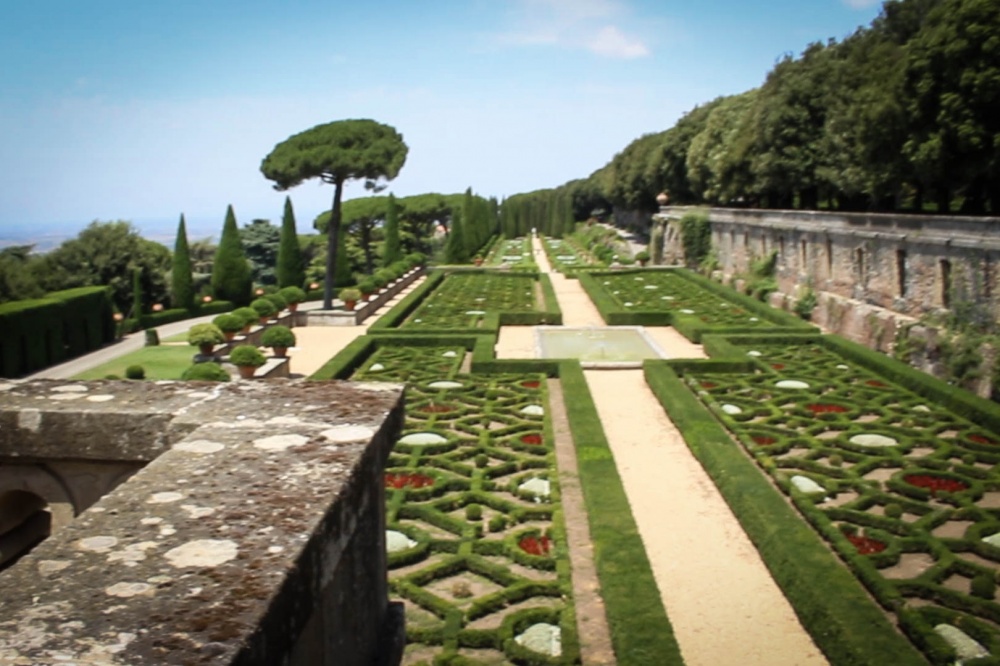
mater-3Podczas Kapituły, mam okazję razem z kapitulantkami brać udział w zorganizowanych wycieczkach. W zeszłym tygodniu byłam w Castel Gandolfo, w którym można teraz zwiedzać piękne ogrody, po których przechadzali się papieże. Dołączyłam tam do grupy hiszpańskiej, żeby szlifować język i hitem dnia stało się słówko nadużywane przez naszą kolumbijską przewodniczkę. Włoski zwrot „ovviamente” powtarzany przez nią co trzecie słowo oznacza „oczywiście”. Tym bardziej komicznie to brzmiało, kiedy używała go, mówiąc jednocześnie o szczegółach ze starożytnego Rzymu, o których większość z nas nie miała pojęcia. Jak łatwo jest nam przyjąć coś za oczywiste jeśli się na tym znamy. Zważywszy jednak na Bożą perspektywę, możemy, zupełnie nie przesadzając, powiedzieć, że nie mamy bladego pojęcia czym jest świat, życie, śmierć, wiara… Naprawdę nic nie powinno być dla nas oczywiste.

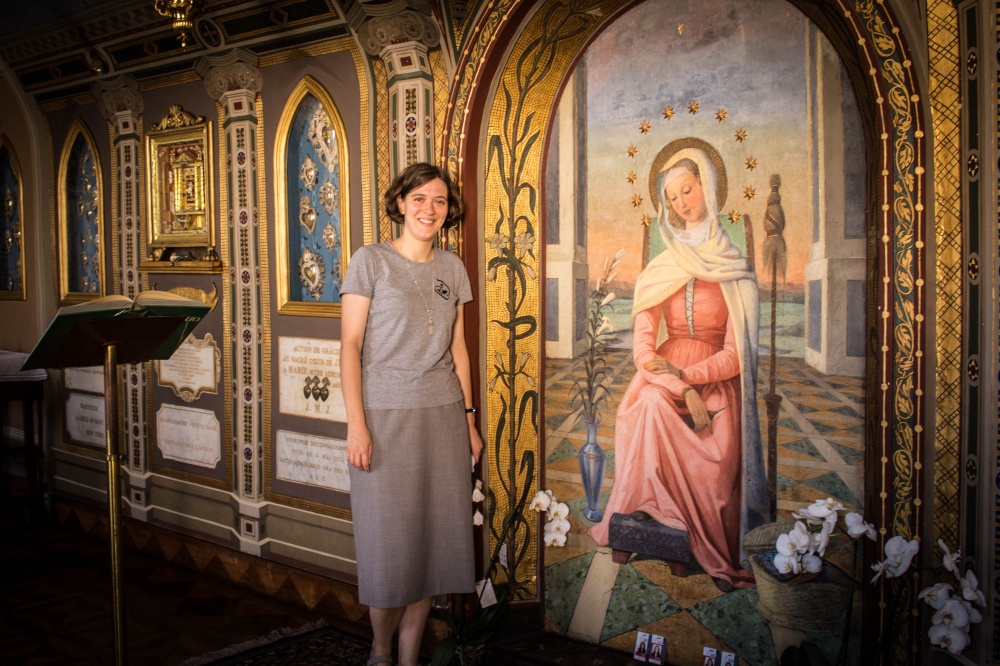
mater-2Wczoraj natomiast wyruszyłam do pobliskiego Rzymu, gdzie byłam ostatnio 21 lat temu (więc nie wiem czy tamten się w ogóle liczy…), ale zamiast iść tam, gdzie większość pielgrzymów, nadchodzących z wielkimi krzyżami by przejść przez Drzwi Święte, ja zmierzałam w kierunku zupełnie przeciwnym – na Trinita dei Monti. Tam u szczytu hiszpańskich schodów (które, o ironio, były znowu w remoncie jak 21 lat temu!!) znajduje się piękna bazylika, ale jej również nie odwiedziłam. Udałam się bowiem do małego krużganku po lewej stronie, gdzie na jednej ze ścian znajduje się bardzo ważny fresk – nasza Mater Admirabilis. Posiedziałam z nią chwilę i próbowałam dostrzec coś więcej niż obraz Maryi, łączącej kontemplację z działaniem. To „coś więcej” może dostrzec tylko serce, które w całej historii fresku namalowanego przez naszą kandydatkę jeszcze w czasach św. Magdaleny Zofii, znajduje kawałek siebie.

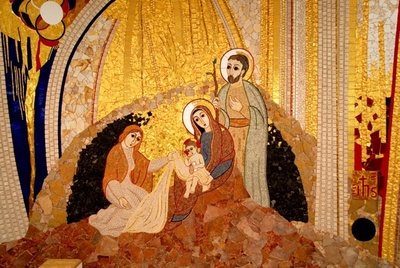
Holy Family, Rupnik 2007-thumb-400x268-8102Miałam też niebywałą przyjemność zobaczyć wczoraj kaplicę stworzoną przez Marko Rupnika w jezuickiej kurii. Jego mozaiki są dla mnie zachwycające za każdym razem. Ta akurat przedstawia scenę Wcielenia i Narodzenia, jedną z kontemplacji w Ćwiczeniach Duchowych św. Ignacego i jej symbolika jest niesamowicie bogata (opis na całą stronę a4!). Podobno jednak komuś nie spodobało się, że w kaplicy nie ma żadnego nawiązania do zmartwychwstania, więc artysta z pewną dozą złośliwości dorobił w jednym z rogów małego kurczaka wykluwającego się z jajka 😉 Nieuchronnie takie sytuacje będą nas w życiu spotykać jeśli będziemy oczekiwali prostych i natychmiastowych odpowiedzi, zamiast szukać ich w rzeczywistości, która jest bardzo skomplikowana, ma zawsze więcej niż jedno dno i przede wszystkim zupełnie nie jest oczywista.

Zaszufladkowano do kategorii Refleksje z życia | Dodaj komentarz

Obviously obvious

fotografie-surreale--fotomotiv-eisberg--816425In today’s Gospel, Jesus talks to the crowds in parables. He liked to do that for a number of reasons and one of them spoke to me today. Even though the reading ends with the words: „Whoever has ears ought to hear!”, to understand the parable you need to stop listening with your ears and start listening with your heart. Sometimes we would like to get clear answers instead of going beyond what is obvious at first glance and finding the depth, in which God speaks to us. Words that recently accompanied us for the morning prayer, reflect this depth very well: „I will show you hidden things, hidden things you have not known.” It is only with the heart that one can see rightly. What is essential is invisible to the eyes” as the fox from the Little Prince used to say.

mater-3During the Chapter, I have the opportunity, together with capitulants, to take part in some organized trips. Last week I was in Castel Gandolfo, where you can now visit the beautiful gardens, which the popes used to stroll through. There I joined the Spanish group to catch up on my language and the thing that made us laugh, was a word overused by our Colombian guide. The Italian phrase „ovviamente”, which she repeated in every sentence means „obviously”. It sounded even more ridiculous when she used it while explaining the details of ancient Rome, which most of us had no idea about. How easy it is to take things for granted if we feel experts. However, given God’s perspective, we can say without exaggeration, that we do not have the slightest idea about what the world, life, death or faith are… Nothing should be obvious to us.

mater-2Yesterday, I set off to Rome, where I was only once before – 21 years ago (so I do not know if that even counts…) – but instead of going where most pilgrims went, carrying large crosses to pass through the Holy Door, I headed in the opposite direction to Trinita dei Monti. There, at the top of the Spanish Steps (which, ironically, were again renovated as 21 years ago!!) is a beautiful basilica, but it was also not the object of my visit. I went up to a small passage on the left side, where one wall there is a very important fresco – our Mater Admirabilis. I sat with her for a while and tried to see something more than an image of Mary combining contemplation and action. That „something more” can only be seen by a heart, which in the history of the fresco painted by our candidate in the days of St. Madeleine Sophie, can find a piece of it’s own story.

Holy Family, Rupnik 2007-thumb-400x268-8102Yesterday I also had an incredible pleasure to see the chapel created by Marko Rupnik in the Jesuit Curia. His mosaics are stunning for me every time. This one shows the scene of the Incarnation and Nativity, one of the contemplations of the Spiritual Exercises of St. Ignatius and its symbolism is extremely rich (described on a full page!). Apparently, however, someone did not like the fact, that there is no reference to the resurrection in the chapel, so the artist, being a bit malicious, made a small chicken hatching from the egg in one of the corners 😉 Inevitably, such situations will meet us in life if we keep expecting simple and immediate answers instead of looking for them in a reality, which is very complex, mysterious and, above all, not at all obvious.

Zaszufladkowano do kategorii God is good | Dodaj komentarz

Adopt a terrorist

0743c159d74b1fbf195361503e3d9bf3640000-300x200This morning when I read about the attacks, my first thought was „it started”. Now everyone will be the expert to judge. Some will use the tragedy against refugees, some will use it a an excuse for bombing another country and just accidentally taking some oil. Some will change their profile picture to the flag of France, and others will increase inspections at airports. Some will light a candle at the French embassy, and others will in another way declare their solidarity with the French. The question, however, is much deeper – will this change the world? No. It will restore our peace. We will stand in solidarity, declare war on terrorism, will not let „others” into the country. It will be calm. In a few days, weeks, months, everyone will forget about Paris and return to everyday life. Only, again we are seeming to miss the gospel… „Do you think that I have come to establish peace on the earth? No, I tell you, but rather division. From now on a household of five will be divided, three against two and two against three” (Lk 12: 51-52). Peace is not the greatest value, love is.

Today I visited the museum of exile in Gdynia. This is one of the modern museums, where in an interactive way, you can learn an important part of our history. This time, the history of immigrants, who at different times, in different directions, and for very different reasons left Poland. Some have been forced to do so, but most did so voluntarily. When I read about the ships to America, where in inhuman conditions, taking third class, young men traveled in search of a better living, it was hard not to notice how not much has changed in 100 years. Only now, in Poland, we are at the other side. For some, today our country is a dream. And some of us, knowing our history have the nerve to shout  „Poland for Poles” … Nation is not the greatest value, love is.

More than about the victims and refugees, I thought about the perpetrators today. What could make someone do such cruel things in the name of God? We know it’s essentially not about God, but I think it may be about ideals. Ideals that have been taken away from the youth by a secular world. We don’t want anyone to feel stressed, we try not to be demanding, but we believe everyone is entitled to have everything. Perhaps this is where we can find the root of violence and people looking for the meaning of life in the wrong places.  Maybe this is why they reach for fundamentalism which leads to a great tragedies. Ideals are not the greatest value, love is.

And where in this world full of pain and injustice should a Christian find himself? What should he do to change the world? Only love. So little and so much at the same time. Loving every refugee, every Muslim, every neighbor, and what’s more – every single terrorist. Every Christian should spiritually adopt one of the terrorists in ISIS. He should faithfully pray for him every day, he should fast for him and offer his suffering for him. He should trust his almighty God, that He can transform the human heart, which has been overwhelmed by hatred, which has been brainwashed and which is killing in the name of God. Do you believe He can? Do you really want to change the face of the earth? Just love.

Zaszufladkowano do kategorii God is good | Dodaj komentarz

A dla Ciebie czym jest grzech?

3a689800daba1001a49ba5da26620244Dzisiejsza Ewangelia przedstawia ciekawy obraz i wiele mi osobiście rozjaśnia: „Pewnego razu Jezus przechodził w szabat wśród zbóż. Uczniowie Jego, będąc głodni, zaczęli zrywać kłosy i jeść. Gdy to ujrzeli faryzeusze, rzekli Mu: Oto Twoi uczniowie czynią to, czego nie wolno czynić w szabat. A On im odpowiedział: Nie czytaliście, co uczynił Dawid, gdy był głodny, on i jego towarzysze? Jak wszedł do domu Bożego i jadł chleby pokładne, których nie było wolno jeść jemu ani jego towarzyszom, tylko samym kapłanom?” (Mt 12,1-4).

Ostatnio dużo rozważam o tym czym jest grzech. Na podstawie mojego własnego doświadczenia i pewnej obserwacji świata, wydaje mi się, że można rozumieć go dwojako w zależności od postawy, którą przyjmiemy. Pierwsza postawa objawia się wtedy, kiedy grzech rozumiemy jako złamanie prawa, zawiedzenie Boga w Jego oczekiwaniach wobec nas, niedotrzymanie danego słowa. Żyjemy wtedy przede wszystkim w perspektywie kary, którą może być gniew Boży, wieczne potępienie, albo po prostu lekka nieprzychylność Boga wobec nas na tym świecie. Co charakterystyczne, grzech jawi się wtedy jako zakazany owoc, który zasadniczo byłoby fajnie zjeść, ale jednak „nie wolno”. Nie wypada też pytać Boga dlaczego jest zakazany, bo przecież mógłby się obrazić, że kwestionujemy Jego wszechwiedzę… Naszym ulubionym cytatem ze św. Pawła jest: „Unikajcie wszystkiego, co ma choćby pozór zła” (1 Tes 5,22)  Najchętniej wtedy chowamy się w bezpiecznej przystani, gdzie próbujemy być „w porządku” i gdzie nikt do niczego nie może się przyczepić lub pewni swojej doskonałości próbujemy innym wytykać ich błędy.

Druga postawa jest bardzo różna od pierwszej. Rozumiemy wtedy grzech jako brak miłości, straconą okazję, by być blisko z Tym, którego kochamy najbardziej; jako ból, który zadajemy sami sobie (mimo, że póki co możemy nie odczuwać jego skutków). Żyjemy tęsknotą za pełnią, widzimy jak daleko jesteśmy od  prawdziwej Miłości. Wtedy mamy w sobie wiele pytań, wątpliwości, kłócimy się z Bogiem, odchodzimy, wracamy, szukamy swojej własnej drogi do Niego. Żyjemy na granicy prawa, często je przekraczając; narażamy się na krytykę, pozwalamy się zakwestionować. Robimy różne głupie rzeczy, ale mamy w sercu dwie pewności: Po pierwsze wiemy, że grzech jest czymś najgorszym na świecie, bo oddziela nas od wiecznego i doczesnego szczęścia – zdajemy sobie sprawę, że to szatańska sztuczka, że jawi się jako smakowity kąsek. Po drugie, mamy niezachwianą pewność, że Bóg czeka na nas z otwartymi ramionami, by przyjąć nas z powrotem nawet jeśli bardzo się pogubimy. Choć często nie postępujemy tak, jak byśmy chcieli, nie boimy się popełniać błędów, bo wierzymy, że one nas uczą i pozwalają nam wzrastać. Wiemy też, że grzech nie jest kwestią zewnętrznych czynów, ale serca, które zna tylko Pan Bóg. Naszym ulubionym cytatem ze św. Pawła są słowa:”Wszystko mi wolno, ale nie wszystko przynosi korzyść. Wszystko mi wolno, ale ja niczemu nie oddam się w niewolę” (1 Kor 6,12)

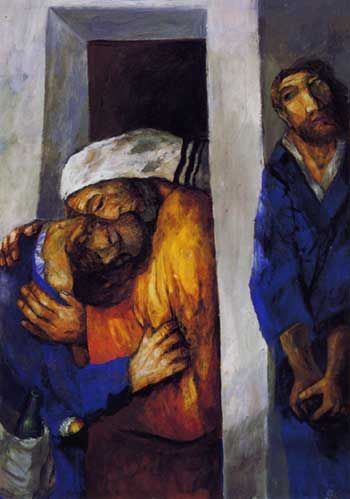
Czy te obrazy kogoś Wam nie przypominają? Oczywiście Miłosiernego Ojca i Jego dwóch synów! Obraz tak szczególnie ważny w roku miłosierdzia. Mnie zachęca przede wszystkim do spojrzenia na starszego syna i wystrzegania się postawy, która doprowadziła go do tragedii. Jego bowiem największą obawą jest myśl, że nie będzie sądu, nie będzie kary i nie będzie sprawiedliwości, takiej jaką rozumiemy na ziemi. Ta obawa jest całkiem uzasadniona, bo on się tak stara przez całe życie, żeby żyć sprawiedliwie i nie być jak „jawnogrzesznicy”, poświęcając swoje szczęście dla Boga. Jeśli tak właśnie widzisz świat, to usłysz dziś mocne słowa Jezusa i nie patrz już z wyrzutem na marnotrawnego, ale naucz się od niego jak żyć w wolności:

„Gdybyście zrozumieli, co znaczy: Chcę raczej miłosierdzia niż ofiary, nie potępialibyście niewinnych. Albowiem Syn Człowieczy jest Panem szabatu.” (Mt 12, 7-8) I nie tylko Szabatu, ale także świata, grzechu i WSZYSTKIEGO!

Zaszufladkowano do kategorii Refleksje z życia | Jeden komentarz

And what is sin for you?

3a689800daba1001a49ba5da26620244Today’s gospel presents an interesting story and is very inspiring for me: „At that time Jesus was going through a field of grain on the sabbath. His disciples were hungry and began to pick the heads of grain and eat them. When the Pharisees saw this, they said to him, “See, your disciples are doing what is unlawful to do on the sabbath.” He said to them “Have you not read what David did when he and his companions were hungry, how he went into the house of God and ate the bread of offering, which neither he nor his companions but only the priests could lawfully eat?” (Mt 12,1-4).

Lately I have been thinking a lot about sin. Based on my own experience and some observations of the world, it seems to me that it can be understood in two ways depending on the attitude that we present. The first attitude is when we understand sin as violation of the law, disappointing God in His expectations for us, not keeping our word. We then seem to live in view of the penalty, which can be understood as the anger of God, eternal condemnation, or maybe just God’s slight disapproval for our happiness. Typically in this approach, sin appears as the forbidden fruit, which essentially would be nice to eat, but it is „not allowed”. It is also not proper to ask God why it is forbidden, because it might seem like questioning his omniscience… Our favorite quote from St. Paul is: „Refrain from every kind of evil” (1 Thessalonians 5:22). We tend to hide in a safe harbor, where we try to be „correct” and where no one can find anything against us or, in other cases, certain of our excellence we look at others pointing out their mistakes.

The second attitude is very different from the first. We understand sin as lack of love, a lost opportunity to be close to the one whom we love most; as pain that we apply to ourselves (even though we might not feel its effects yet). We are longing for fullness, we see how far we are from true Love. Then we have a lot of questions, doubts, we argue with God, we walk away, we come back, we look for our own way towards Him. We live on the fringes of the law, often exceeding them, we expose ourselves to criticism, allow ourselves to be questioned. We do a variety of stupid things, but we have confidence in the heart of the two: Firstly, we know that sin is the worst thing in the world, because it separates us from eternal and temporal happiness – we realize that it’s the devil’s doing, that it appears to be a tasty treat. Secondly, we have unwavering confidence that God is waiting for us with open arms to welcome us back, even if we get very lost. Though often we do not do as we want, we are not afraid to make mistakes, because we believe that they teach us how to be better and let us grow. We also know that sin is not a matter of external acts, but can be seen in the heart that is known only to God. Our favorite quote from St. Paul is: „Everything is lawful for me, but not everything is beneficial. Everything is lawful for me, but I will not let myself be dominated by anything.” (1 Cor 6:12)

Do these images seem familiar? Of course, the Merciful Father and his two sons! An image so important in the year of mercy. It encourages me first of all to look at the older son and let go of the attitude that led him to a tragedy. His biggest fear is the thought that there will be no judgment, there will be no penalty and there will be no justice, in the sense we see it today. This fear is quite justified, because he is trying all his lifetime to live righteously, and not be like the „prodigal” one, sacrificing his own happiness for God. If that’s how you see the world, listen today to the strong words of Jesus and do not look now down at the prodigal, but learn from him an important lesson:

„If you knew what this meant, ‘I desire mercy, not sacrifice, you would not have condemned these innocent men. For the Son of Man is Lord of the sabbath.” (Mt 12: 7-8) And not only the sabbath, but also the world, sin and EVERYTHING!

Zaszufladkowano do kategorii God is good | Dodaj komentarz

Dar cierpliwości

Opening Ceremony.004Miałam być cicho przez kilka tygodni, ale wciąż jakieś niespodzianki 😉 Kapituła rozpoczęła się wczoraj pięknym otwarciem i Mszą pod przewodnictwem Adolfo Nicolása, generała jezuitów. Zebrałam dużo materiału i od wczorajszego popołudnia pracuję nad montażem. Ponieważ, przynajmniej w jakiejś części, to dzieło dla Pana Boga, można łatwo zobaczyć, że diabeł zamiata ogonem. Z mojego doświadczenia wynika, że to co on lubi wykorzystać najbardziej to elektronika. Dziś od rana walczę z moimi komputerami (zebrałam ich już 3 !!), żeby zechciały współpracować, ale niestety z marnym skutkiem.

Podczas obiadu byłam trochę przybita, bo nic dziś nie ruszyło do przodu, a ludzie czekają na owoce mojej pracy. Słuchając tego, moja siostra z Francji tylko spojrzał na mnie i powiedziała, parafrazując Jana od Krzyża: kiedy siedzisz przy komputerze, medytując w oczekiwaniu na odwieszenie się komputera, pomyśl o człowieku, który w taki piątek jak dzisiaj, umierając na krzyżu, mógł po prostu powiedzieć: „nic dziś nie zrobiłem”.

No więc teraz, czekając aż mój program się odwiesi, piszę bloga i myślę o Nim. To przecież Jego dzieło – gdyby nie On, żadnej z nas by tu nie było. Cierpliwość jest moim darem na dziś.

Zaszufladkowano do kategorii Bez kategorii | Jeden komentarz

The gift of patience

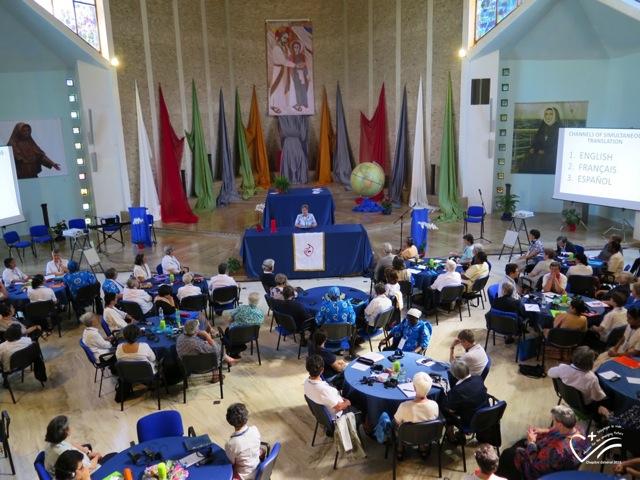
Opening Ceremony.004I was supposed to be quiet for some weeks, but life surprises 😉 The Chapter began yesterday with a beautiful opening and a Holy Mass with the presence of Adolfo Nicolás, general of the Jesuits. I had gathered a lot of video material and since yesterday afternoon I have been working on it. Because this is, a least in some part, a work for God, you can easily see that the devil in not happy about it. From my experience, the things he likes to take advantage of most are all the electronics. Today since morning I have been fighting with my computers (I already gathered 3!!) to make them cooperate with me, but with poor effects.

At lunch I was feeling down because of the fact, that I have not moved forward today and people are waiting for the fruits of my work. Listening to this, my sister from France just looked at me and said, paraphrasing  John of the Cross: when you sit at your computer, meditating while it is trying to unfreeze, think of a man, that, on a Friday like today, dying on the cross, could have just said „I have done nothing today”.

So here I am, waiting for my program to unfreeze, writing my blog and thinking of Him. It’s His work after all – if it wasn’t for Him, we would all definitely not be here. Patience is my gift for the day.

Zaszufladkowano do kategorii God is good | Dodaj komentarz

Kapituła Generalna 2016

logo-Capitulo-General-OK-RGBJuż jutro (7 czerwca) rozpoczynamy najważniejsze wydarzenie w Zgromadzeniu, czyli Kapitułę Generalną. Ponieważ całe moje serce i czas będą zajęte tworzeniem codziennych relacji, najprawdopodobniej będzie tu cisza przez najbliższe 1,5 miesiąca. Bardzo serdecznie zapraszam jednak do towarzyszenia nam wszystkim w tym ważnym czasie. Ci, którzy chcieliby śledzić codzienne wydarzenia, mogą zaglądać na naszą stronę międzynarodową, gdzie znajdą świeże informacje, zdjęcia i filmy po angielsku, hiszpańsku i francusku. Na naszej stronie polskiej oraz Facebooku będziemy zamieszczać podsumowania co kilka dni. Zapraszamy przede wszystkim do wspólnej modlitwy (jutro jeszcze krótki wpis na ten temat), by Duch Święty pozwolił nam odczytać nowe wezwania i wybrać kolejną Matkę Generalną. Dziś wszystkie Siostry zjeżdżały się do Nemi pod Rzymem. Zapraszam do obejrzenia krótkiego filmiku, czyli początków mojej misji filmowej 🙂

Zaszufladkowano do kategorii Bez kategorii | Dodaj komentarz

General Chapter 2016

logo-Capitulo-General-OK-RGBTomorrow (7 June) we begin the most important event in the Society – the General Chapter. Because my whole heart and time will be dedicated to creating daily communication, most likely there will be silence here for the next 1.5 months. We wholeheartedly invite you, however, to accompany all of us in this important event. Those who would like to keep track of daily events, should look at our international  website, where you can find fresh information, photos and videos. We invite you first of all, though, to pray that the Holy Spirit will let us read the new calls and choose the next Mother General. Today, all the sisters were arriving at Nemi near Rome. I invite you to watch the short video, which is the beginning of my video mission 🙂

Zaszufladkowano do kategorii Refleksje o Bogu | Dodaj komentarz